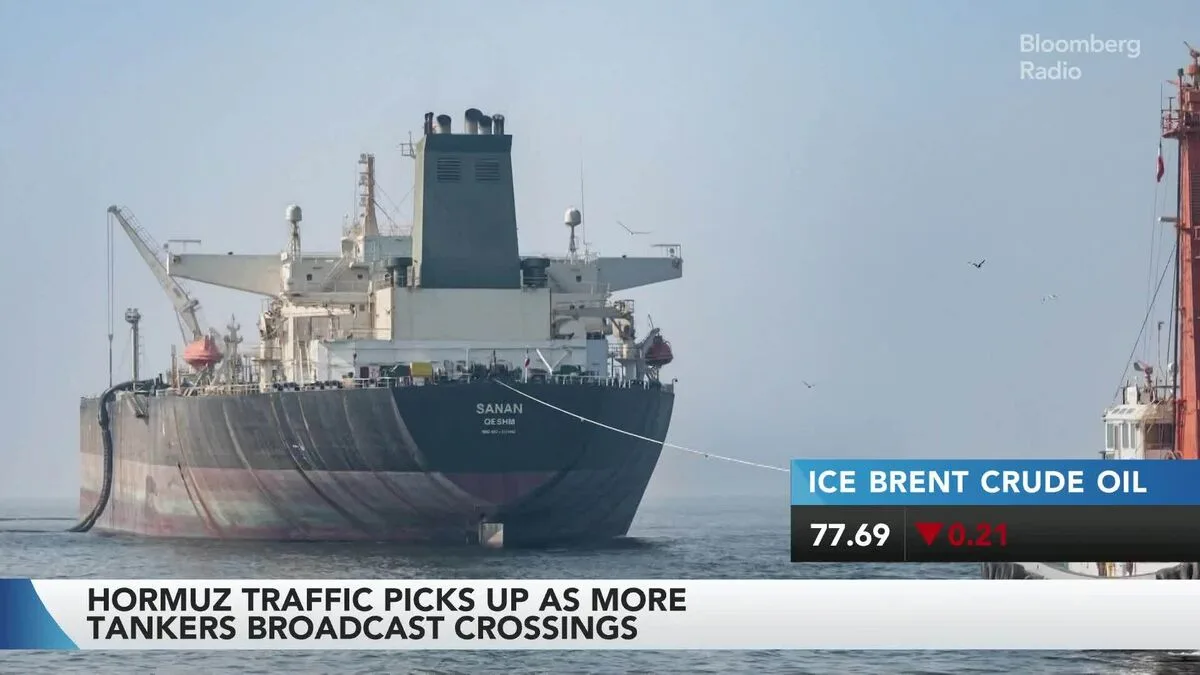
Oil Tanker Traffic Increases in Strait of Hormuz After US-Iran Peace Deal
1-Minute Brief
The resumption of oil tanker traffic and exports signals a shift in Middle East energy flows following the US-Iran agreement.
Key Facts
- Oil tankers have become more overt in transiting the Strait of Hormuz after an agreement between Iran and the US to end their conflict.
- Oil exports from the United Arab Emirates in early June reached nearly 85% of pre-Iran war levels, according to the International Energy Agency.
- The UAE's rebound in exports occurred before the interim peace deal, aided by pipelines, storage, and alternate shipping routes.
- Macquarie Group Ltd. has reduced its Brent oil price forecasts for 2026 and 2027, anticipating a rapid recovery of Middle East oil flows.
- Oil tankers are earning up to $280,000 a day to enter the Persian Gulf for cargo pickups, despite ongoing risks.
What Happened
Following a US-Iran agreement to end their conflict, oil tankers have increased their presence in the Strait of Hormuz and regional oil exports are rebounding.
Why It Matters
The normalization of oil flows through key Middle East routes could impact global energy markets and pricing forecasts, influencing economic and geopolitical dynamics.
What's Next
Observers are watching for sustained stability in shipping routes, further recovery in regional exports, and potential adjustments in global oil prices.
Sources
Confirmed by 2 independent sources
- Bloomberg MarketsCenter22h agoOil Steadies While Tankers Openly Enter Hormuz After Peace Deal
- Bloomberg MarketsCenter17h agoMacquarie Slashes Brent Forecast, Sees Rapid Recovery of Flows
- Bloomberg MarketsCenter15h agoUAE Oil Exports Surge to 85% of Pre-War Levels, IEA Says