Oil Tanker Hit and Strait of Hormuz Traffic Drops Amid Iranian Strike
1-Minute Brief
An oil tanker was hit in the Strait of Hormuz, leading to reduced vessel traffic and rising oil prices.
Key Facts
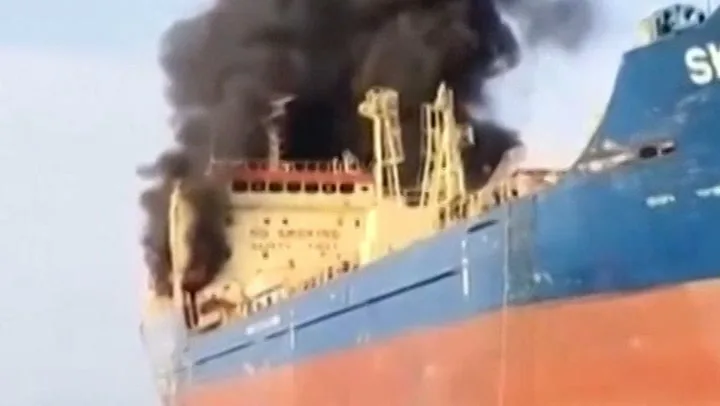
- An oil tanker in the Strait of Hormuz caught fire after being struck by an Iranian attack on March 1.
- Crude oil futures surged by approximately 8% following disruptions in the Strait of Hormuz.
- Iranian attacks on tanker ships led to the effective closure of the Strait of Hormuz.
- Iranian security forces ordered ships not to cross the Strait, impacting global oil markets.
- Vessel traffic through the Strait dropped from 6.5 million tons on February 28 to 0.25 million tons on March 1.
What Happened
On March 1, an oil tanker in the Strait of Hormuz was hit by an Iranian strike, causing it to burst into flames. Following this incident, Iranian security forces reportedly ordered ships not to cross the strait, resulting in a sharp reduction in vessel traffic and disruptions to oil shipments.
Why It Matters
The Strait of Hormuz is a critical passage for global oil transport, accounting for a significant portion of world supply. Disruptions have caused oil prices to surge, raising concerns about potential supply shortages and broader economic impacts. The situation highlights the vulnerability of global energy markets to regional conflict.
Sources
Confirmed by 4 independent sources
- The IndependentLeft17h agoIranian drones send oil tanker up in flames in Strait of Hormuz
- France24Unknown3h agoOil prices surge as tanker traffic in Strait of Hormuz grinds to a halt
- France24Unknown2h agoStrait of Hormuz closure sparks concern over possible global oil shock