Wall Street and Oil Traders Respond to Market Volatility Amid Middle East War
In Brief
Traders in equities and commodities adjust strategies as Middle East conflict impacts financial markets.
Key Facts
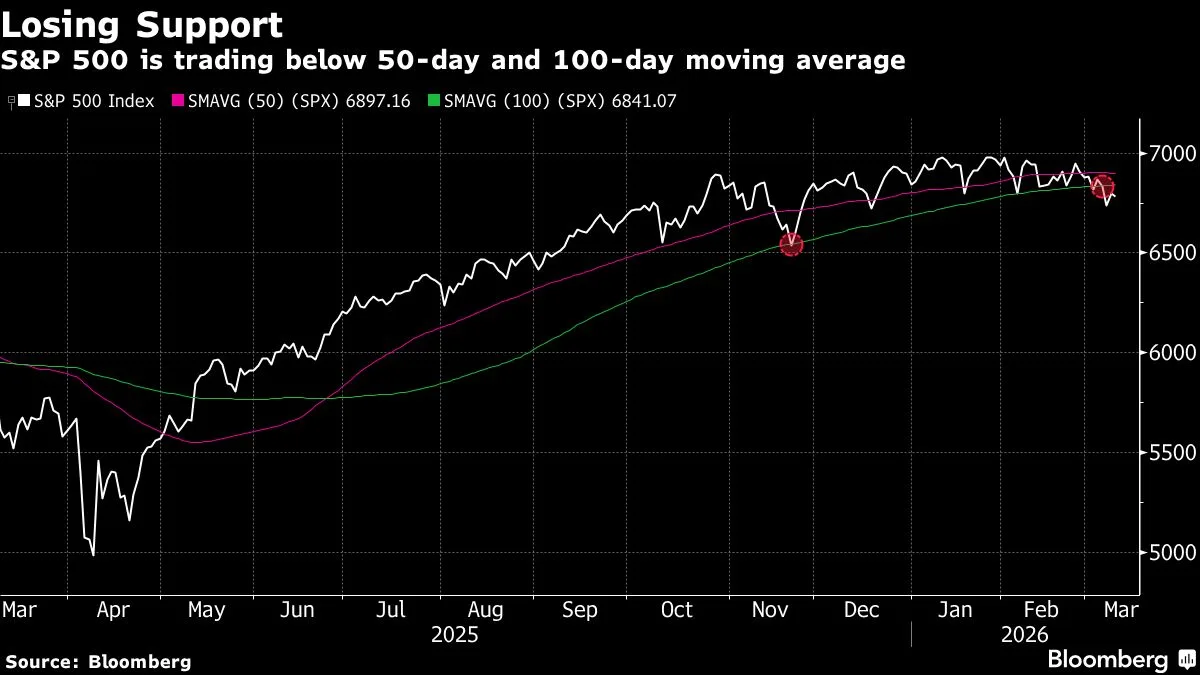
- Wall Street traders are analyzing S&P 500 Index charts for further declines during ongoing Middle East conflict.
- Technical analysts have observed early signs of bearish momentum in the S&P 500 Index.
- Major commodity traders are securing billions in new credit lines to manage potential oil and gas price spikes.
- Oil price volatility has led to concerns about large margin calls for commodity traders.
- The market response is driven by uncertainty related to the war in the Middle East.
What Happened
Wall Street and commodity traders are adjusting their strategies in response to market volatility caused by the ongoing war in the Middle East, with equity traders monitoring the S&P 500 and commodity traders securing credit to manage potential price spikes.
Why It Matters
Market volatility can affect investment portfolios, credit availability, and energy prices globally. The actions of traders reflect broader concerns about financial stability and the potential for significant market movements.
What's Next
Observers are watching for further shifts in the S&P 500 and energy prices, as well as any additional measures traders may take to manage risk amid ongoing geopolitical uncertainty.
Sources
- Bloomberg Markets — Wall Street Traders Hunt for Bottom as War Turmoil Continues(21h ago)
- Bloomberg Markets — Oil Traders Line Up $7 Billion in Credit to Weather War Turmoil(1d ago)