Partial Lunar Eclipse Turns Moon Red Across U.S. on August 27-28
1-Minute Brief
The lunar eclipse provided a rare opportunity for widespread skywatching, drawing attention to astronomical events visible across much of the Unite...
Key Facts
- A near-total lunar eclipse was visible across the U.S. on the night of August 27-28.
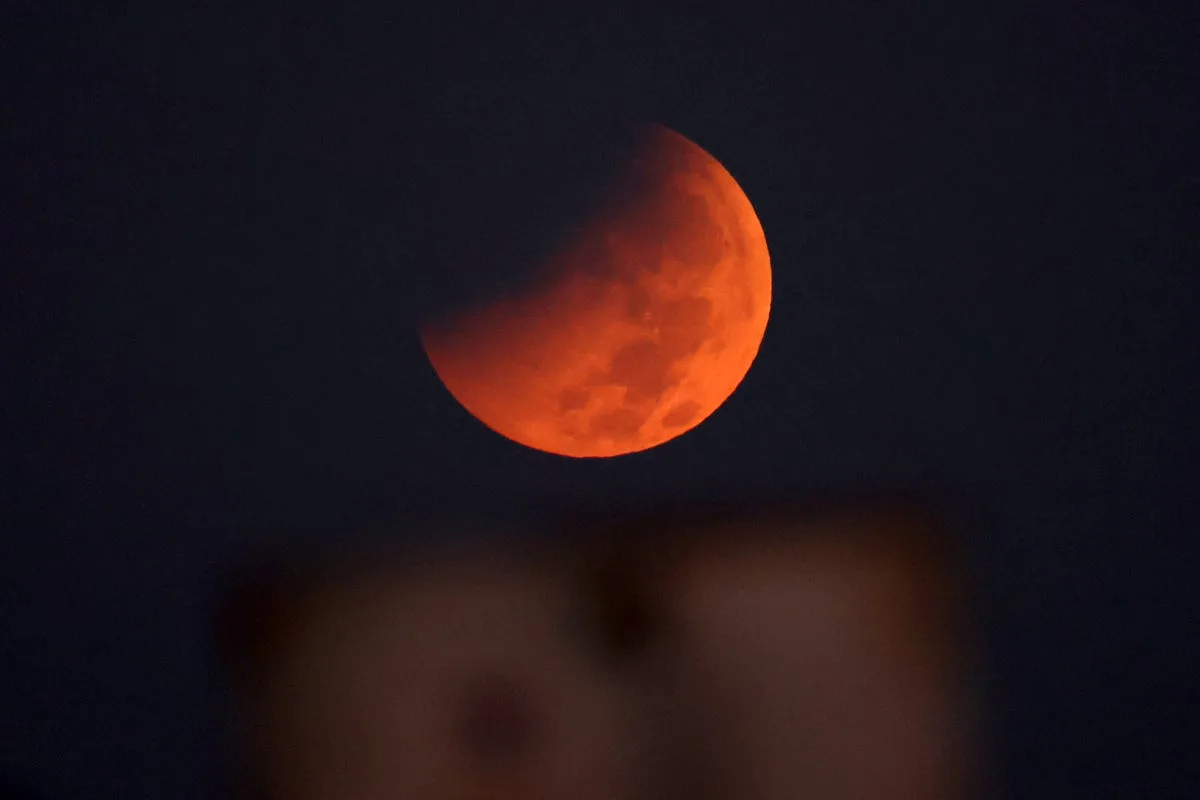
- The eclipse caused the Moon to appear bright or blood red during its peak.
- Observers in Colorado, Pittsburgh, New Mexico, and the Bay Area reported clear views of the event.
- Some regions, such as Seattle, experienced weather conditions that limited visibility.
- The eclipse followed a recent solar eclipse that was also visible in parts of the U.S.
What Happened
A partial lunar eclipse occurred on the night of August 27-28, with the Moon turning red as it passed through Earth's shadow. The event was visible across much of the United States, with varying viewing conditions depending on location.
Why It Matters
Lunar eclipses are significant astronomical events that allow the public to engage with science and space observation. Such occurrences can increase interest in astronomy and provide educational opportunities.
What's Next
No additional lunar eclipses are mentioned in the sources. Observers are encouraged to follow updates from astronomical organizations for future celestial events.
Sources
Confirmed by 4 independent sources
- SpaceUnknown12h agoPartial lunar eclipse Aug. 27-28 live updates — tonight is the night!
- The Seattle TimesUnknown18h agoBad news for those hoping to see a lunar eclipse tonight
- The IndependentLeft2h agoLunar eclipse turns Moon bright red