New Study Links T. rex’s Tiny Arms to Evolution of Large, Robust Skulls
1-Minute Brief
Understanding why T. rex evolved small arms offers insight into dinosaur adaptation and predator evolution.
Key Facts
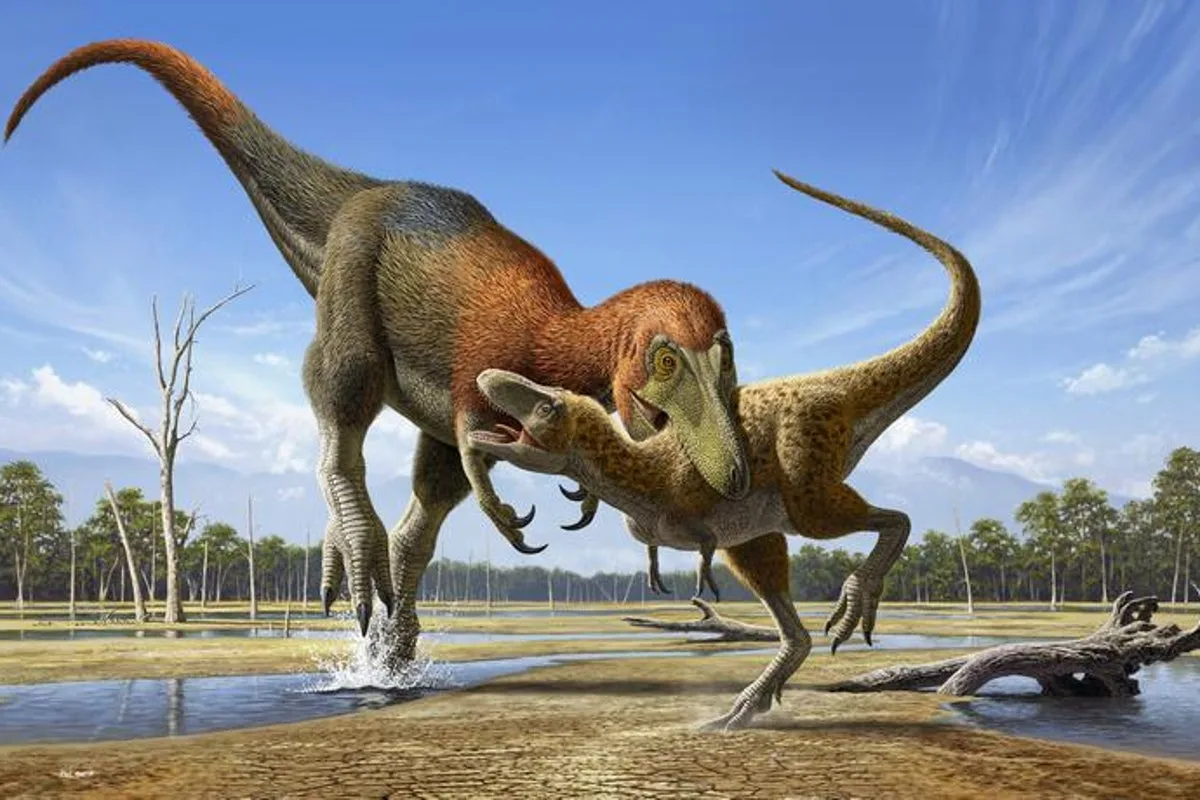
- Researchers suggest that T. rex’s tiny arms are linked to the evolution of its large, powerful head.
- Adaptations for robust skulls in meat-eating dinosaurs began in regions with gigantic prey, according to researchers.
- Multiple science outlets have reported on the study’s findings, highlighting the shift in predatory adaptations.
- The study addresses a longstanding question about the purpose of T. rex’s unusually short forelimbs.
- The research proposes that as the head became the primary predatory tool, the arms became less necessary.
What Happened
A new study examined why meat-eating dinosaurs like T. rex evolved tiny arms, proposing that the development of large, robust skulls for predation reduced the need for strong forelimbs.
Why It Matters
The findings contribute to scientific understanding of dinosaur evolution, particularly how anatomical changes may be driven by ecological factors such as prey size and feeding strategies.
What's Next
Further research may explore similar adaptations in other theropod species and investigate additional ecological influences on dinosaur morphology.
Sources
Confirmed by 2 independent sources
- The IndependentLeft2h agoNew study explains why T rex had such tiny arms: ‘The head took over’
- Google NewsUnknown7h agoWhy meat-eating dinosaurs like T. rex evolved tiny arms