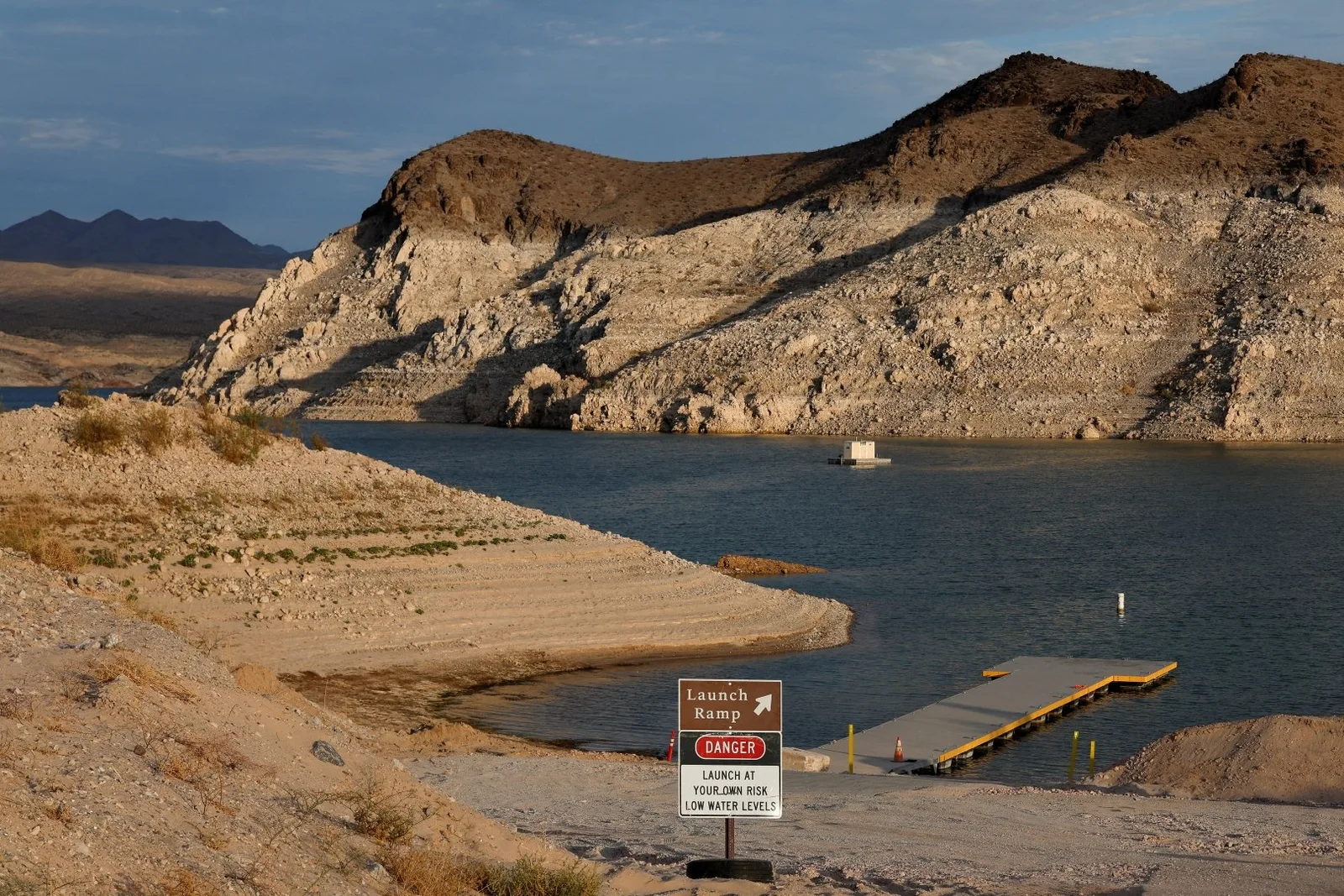
Lake Mead Reaches Record Low, Affecting Water Supply for Three US States
1-Minute Brief
The record low at Lake Mead highlights growing concerns over water scarcity and its impact on communities and economies in the western United States.
Key Facts
- Lake Mead, the largest reservoir in the United States, is located on the border of Arizona and Nevada.
- Millions of people rely on the Colorado River and Lake Mead for drinking water, electricity, and irrigation.
- Lake Mead has now fallen to its lowest recorded level, according to recent reports.
- Heat waves are contributing to hazardous conditions for workers and financial challenges for businesses, according to climate experts.
- The declining water supply is affecting three US states, as reported by Al Jazeera.
What Happened
Lake Mead, the largest reservoir in the US, has reached a record low level, impacting water supply for Arizona, Nevada, and a third state. This development comes amid ongoing drought and heat waves in the region.
Why It Matters
The drop in Lake Mead's water level threatens the availability of drinking water, electricity generation, and agricultural irrigation for millions. It also underscores broader challenges posed by climate conditions in the western US.
What's Next
Authorities and stakeholders are expected to monitor water allocations and implement conservation measures. Ongoing drought and heat patterns may further strain resources, prompting policy discussions on water management.
Sources
Confirmed by 2 independent sources
- Al JazeeraLeft26m agoWater supply for three US states drips down, Lake Mead at record low
- CBS NewsLeft9h agoRecord-breaking heat takes mounting toll on the U.S. economy
- CBS NewsLeft8h agoRunning Dry: The fight for the West's dwindling water supply | 60 Minutes Archive