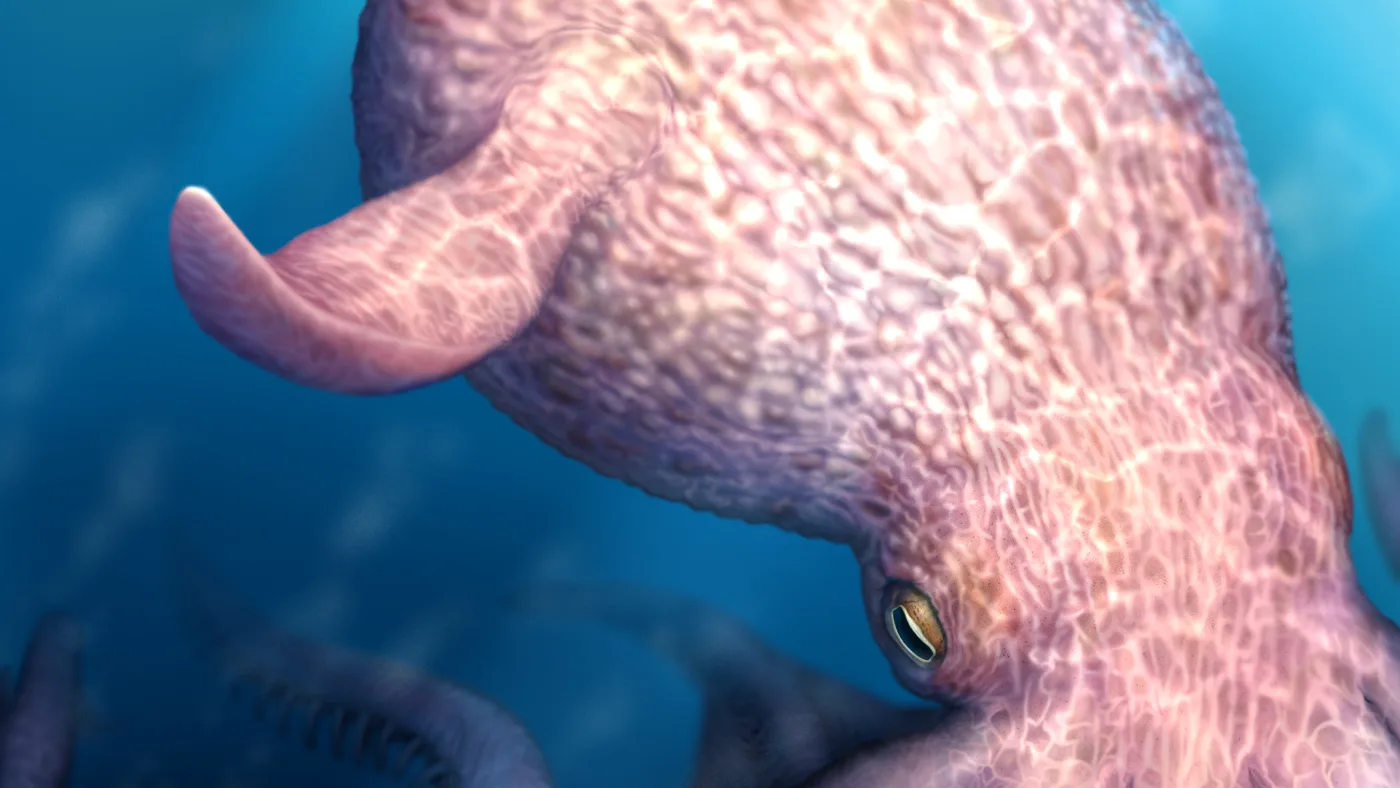
Fossils Suggest 19-Meter Kraken-Like Predator Lived in Cretaceous Seas
1-Minute Brief
The discovery of giant octopus-like fossils may reshape understanding of ancient marine ecosystems and predator hierarchies.
Key Facts
- Researchers found evidence of enormous Kraken-like creatures that lived around 100 million years ago.
- Jaw fossils indicate the animal may have reached lengths of up to 19 meters (about 60 feet).
- These predators are believed to have competed with large apex predators such as mosasaurs.
- The study was conducted by researchers at Hokkaido University.
- The fossils suggest the creature used powerful jaws to crush its prey.
What Happened
Scientists have discovered fossils indicating that a massive, kraken-like octopus or squid lived in the seas during the late Cretaceous period, potentially reaching 19 meters in length and preying alongside dinosaurs.
Why It Matters
This finding could alter scientific perspectives on marine life during the Cretaceous, suggesting that giant cephalopods may have played a significant role in ancient ocean food chains.
What's Next
Further research is expected to analyze additional fossil evidence and clarify the evolutionary history and ecological impact of these ancient cephalopods.
Sources
Confirmed by 3 independent sources
- NPR NewsCenter1h agoA real-life Kraken stalked the seas of the late Cretaceous
- Fox NewsRight1h ago'Gigantic' ancient octopus used jaws to crush prey and hunted alongside the dinosaurs 100M years ago: study
- Google NewsUnknown4h agoMeet the 19-meter Cretaceous kraken that swam with mosasaurs