Fossil Evidence Suggests 19-Metre Kraken-Like Octopus Lived 100 Million Years Ago
1-Minute Brief
The discovery of giant octopus fossils provides new insight into prehistoric ocean ecosystems and ancient marine predators.
Key Facts
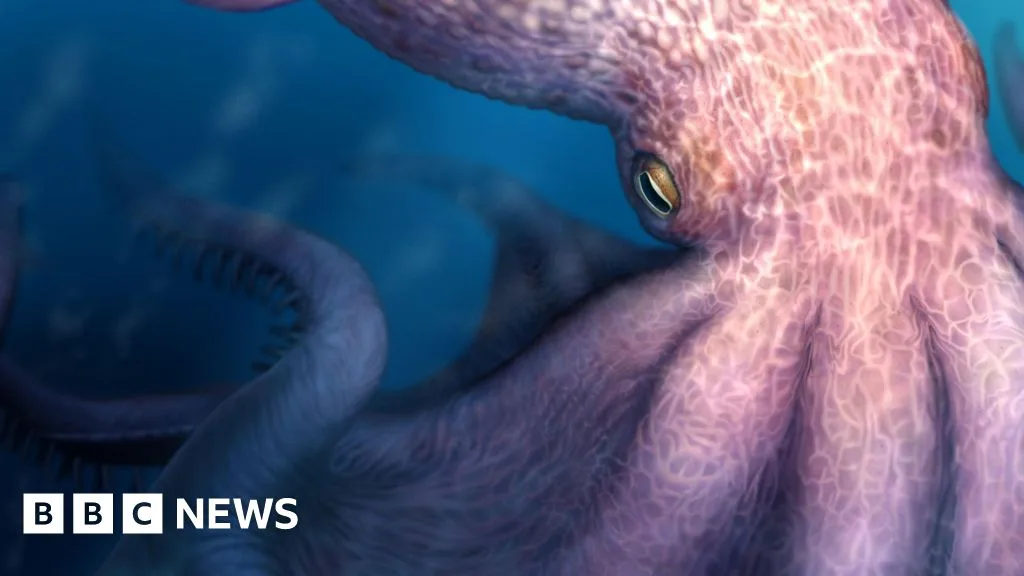
- Fossil evidence indicates a kraken-like octopus up to 19 metres (about 62 feet) long existed 100 million years ago.
- BBC News reports that these giant octopuses may have dominated the oceans during the age of dinosaurs.
- The fossils suggest these octopuses were top predators, capable of crunching the bones of their prey.
- The Independent describes the animal as the top predator of its time, ruling prehistoric oceans.
- Multiple outlets, including The Guardian and BBC, compare the creature’s size and predatory behavior to legendary krakens.
What Happened
Scientists have discovered fossil remains suggesting that a giant, kraken-like octopus, measuring up to 19 metres, lived in the oceans 100 million years ago and was a dominant predator.
Why It Matters
This finding challenges previous assumptions about ancient marine life and highlights the diversity and scale of prehistoric ocean predators, offering new perspectives on evolutionary history.
What's Next
Researchers are expected to conduct further analysis of the fossils to better understand the species’ biology, behavior, and ecological impact in ancient marine environments.
Sources
Confirmed by 3 independent sources
- Google NewsUnknown14h ago‘Kraken-like’ giant octopuses 100m years ago crunched bones of prey
- The IndependentLeft43m agoNew fossil finds show that giant kraken-like octopuses ruled prehistoric oceans
- BBC NewsCenter14h agoMeet the 19-metre octopus that prowled the seas 100 million years ago